Views: 0 Author: Site Editor Publish Time: 2025-05-07 Origin: Site
In our daily lives, tissue paper is a small yet essential item. Whether it’s facial tissue, toilet paper, or paper napkins, these products offer comfort, cleanliness, and convenience. But have you ever wondered how these soft, absorbent sheets are produced on a large scale?
Behind every tissue paper you use lies a complex and well-engineered piece of equipment called the tissue paper machine. As global demand for tissue products continues to rise, especially in hygiene-sensitive industries and consumer markets, the need for advanced, automated tissue paper machines is also increasing. Manufacturing these machines requires precision, technical expertise, and a deep understanding of paper conversion processes.
A tissue paper machine is a specialized industrial machine designed to convert raw materials, typically jumbo tissue rolls, into various types of finished tissue paper products. These products may include facial tissues, toilet paper, napkins, kitchen towels, and more. Each product type may require a different machine configuration, but the basic function remains the same: unwind, process, cut, fold, and stack the tissue in a consistent and automated way.
Facial Tissue Machines: Used to produce small, soft, folded tissues used for facial cleaning.
Toilet Paper Rewinding Machines: For converting jumbo rolls into smaller, perforated toilet paper rolls.
Napkin Folding Machines: Designed to cut and fold napkins from large paper reels.
Tissue Paper Packaging Machines: For wrapping and packaging the finished product automatically.
Tissue paper machines improve production speed, reduce labor costs, and enhance product consistency. For manufacturers, investing in a high-quality machine means higher productivity and better market competitiveness.
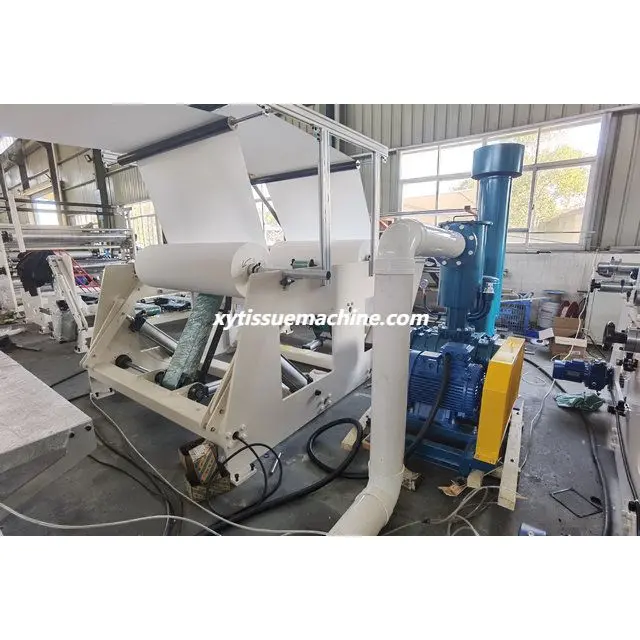
To understand how to build a tissue paper machine, we need to examine its key components. Each part plays an essential role in transforming raw paper into a usable product.
The first step in the tissue-making process is unwinding the jumbo roll, also known as the parent roll. This unit holds the large roll in place and feeds the tissue into the machine under controlled tension. Key features include:
Pneumatic or hydraulic roll holders
Tension control systems
Paper alignment mechanisms
Some tissue products include embossed textures or printed logos. An embossing roller creates patterns that enhance the feel and appearance of the tissue, while a printing unit may apply colored logos or designs.
This is a critical part of a facial tissue machine. The folding system, usually a V-fold or Z-fold, ensures each sheet is neatly stacked and can be pulled out easily from a box. Folding is performed by:
Vacuum suction drums
Folding plates or bars
Timing synchronization to match sheet speed
After folding, the tissue paper must be cut into precise lengths. This is done by high-speed rotary or guillotine knives, which are adjustable for different sizes. Cutting accuracy is vital to maintain product uniformity.
Modern tissue machines come with automatic counting systems that calculate the number of sheets and create pre-defined stacks. This automation is essential for bulk packaging and saves manual labor.
A tissue machine must be easy to operate and maintain. PLC (Programmable Logic Controller) systems, touch-screen HMIs (Human-Machine Interfaces), and real-time monitoring sensors are included for:
Speed control
Paper tension adjustments
Error detection
Maintenance alerts
These components are integrated into a cohesive structure, often mounted on a robust steel frame with safety guards and emergency stop buttons.
Now that we know what a tissue paper machine is and what it’s made of, let’s explore how manufacturers build these machines. Creating a high-quality machine requires a combination of design, engineering, precision manufacturing, and testing.
Before building a machine, manufacturers must understand customer needs and application requirements. This involves:
Identifying product specifications (e.g., tissue size, thickness, folding style)
Choosing between semi-automatic or fully automatic models
Considering space constraints and production volume
Engineers then create 3D models and technical drawings using CAD software. These models show every component and assembly detail of the machine.
The machine consists of mechanical, electrical, and pneumatic parts. Manufacturers must source:
Steel frames and rollers
Bearings and shafts
Motors, sensors, and electrical wiring
PLCs and HMI screens
Pneumatic valves and actuators
High-quality parts ensure machine durability and reduce maintenance needs.
The main frame and custom parts are fabricated using CNC machines, lathes, and welding tools. Each part is cut, drilled, and shaped according to the technical drawings. Surface finishing, such as painting or powder coating, is done for corrosion resistance and aesthetics.
In this stage, technicians assemble the unwinding unit, folding mechanism, cutting knives, and stacking system. Alignment and precision are key to ensure smooth operation. Lubrication is applied to reduce wear and friction.
Electricians install the wiring, sensors, motor drives, and PLCs. Pneumatic tubes and valves are connected to folding and cutting mechanisms for smooth control. The control panel is programmed with the required parameters.
Once assembled, the machine goes through a full dry run test without paper to check:
Mechanical movement
Sensor responsiveness
Safety features
Next, it is tested with real paper to evaluate:
Paper feeding and tension
Folding accuracy
Cutting precision
Stacking quality
Engineers make final adjustments and calibrations to optimize performance.
After successful testing, the machine is cleaned, lubricated, and carefully packed for delivery. For international clients, proper export packing and documentation are prepared.
Fujian Xinyun Machinery Development Co., Ltd. has over 15 years of experience in manufacturing high-quality tissue paper converting machines. Located in China, the company offers a wide range of machines, including facial tissue machines, toilet paper machines, napkin folding machines, and automatic packing lines.
Customized Solutions: Machines tailored to client needs and factory layout
Reliable Performance: Stable operation, minimal downtime
User-Friendly Interface: Easy to operate and maintain
Global Service: Exported to over 50 countries with professional technical support
Certifications: ISO and CE-compliant machines ensuring safety and quality
Xinyun Machinery not only builds machines but also supports customers with installation guidance, operator training, and after-sales service.
Making a tissue paper machine is a complex yet fascinating process that combines engineering precision, automation technology, and practical manufacturing knowledge. From raw materials to a fully functioning unit, each stage plays a vital role in ensuring the final product performs efficiently and consistently.
Understanding how a tissue paper machine is made helps buyers make informed decisions, especially when quality, customization, and productivity matter. If you're looking to invest in a reliable facial tissue machine, Fujian Xinyun Machinery is a trusted partner with proven expertise in the field.